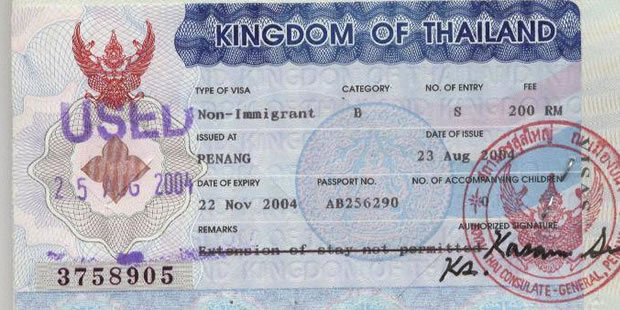
Category: Immigration

Other Visa Options for Thailand

If you want to stay long-term in Thailand but don’t qualify for a Non-Immigrant visa and
don’t want to (or can’t) pay for the Elite visa, there are a couple of other options available.
Of course, if you can find employment in Thailand, either with a Thai company, a school, or
get placed there with a foreign company, then that entitles you to get a work permit and a
Non-Immigrant B visa which allows you to stay for as long as you remain employed, and
with your work permit, you’ll find it easy to open a Thai bank account.
However, it can be tough to land a job in Thailand as a foreigner, in many cases you’ll
need to be fluent in both Thai and English, hold a degree as a minimum and find someone
willing to take you on as you won’t be able to work self-employed. Traditionally, teaching
English has been a popular option, however, the salary has generally not increased in the
last 15 years, so your starting salary may not be enough to live on and the schools seem
to prefer to use non-native English speakers such as Filipinos who are happy to work for
less. Also, there are more and more reports online of western English teachers having
difficulties with their employer as employees in Thailand don’t enjoy the same rights and
privileges as they do in the west.
There are a few other options you may like to consider:

Volunteering in Thailand


There are many options with regards to volunteer work in Thailand, from conservation
work, animal sanctuaries, teaching English and many, many more. There will usually be a
minimum length of time to which you must commit, some places will provide free, basic
accommodation and food, whereas other places will require you to provide for yourself.
There may or may not be a fee or deposit which you will need to pay to secure your place
as a volunteer. An excellent place to start is VolunteerWorkThailand.org, which lists places
to contact with your offer of volunteer work. Once you have secured a position that you
think would suit you, then you can get the ball rolling with your visa application. You will be
applying for a Non-Immigrant “O” visa based on volunteer work and will need to submit the
following documents to your local embassy:
 Your passport with a minimum of six months validity (although you should consider
obtaining a new passport if you have under a year as it’s much easier to do so in
your home country rather than in Thailand).
 Completed visa application form with two passport photos.
 Letter of invitation from the company you will be working for.
 A copy of the company’s registration documents.
 The relevant visa fee.

This visa will entitle you to stay in the country for up to a year, but you must remember that
you must report to your local immigration every 90 days and ensure you obtain a re-entry
permit before you leave the country otherwise your visa will be voided. Volunteering is a
great way to meet people, learn about Thailand and get something interesting on your
resume. However, you obviously won’t get paid and will almost certainly be living in shared
accommodation with basic food.

Studying in Thailand


Studying in Thailand is another excellent option which allows you to obtain a long-term
Non-Immigrant “ED” visa on which you can stay for up to a year. Traditionally, Thai
language courses have been popular with foreigners and Muay Thai (Thai kick-boxing)
courses are also very popular. Both will qualify you the ED visa. There are also many other
courses offered by various Thai colleges and universities, with most institutions offering
assistance with obtaining your visa.
It’s a 90-day visa initially, but you can stay for up to a year on an ED visa (your school will
provide the relevant documents extend it), then you may be able to renew it if you need to
continue your studies. Like with other visas you need to make sure you do 90-day reports
and use re-entry permits. Note that if you stop your studies for any reason, your visa will
technically become void and you’ll need to leave the country (the school is likely to contact
immigration if you stop attending).
To obtain a Non-Immigrant “ED” visa, you must be enrolled on a full-time, recognised
course which is a minimum on 100 hours over 90 days (about 8-10 hours per week), and
supply the following documents at a Thai embassy in your home country or a neighbouring
country:
 Your passport with a minimum of 6 months validity.
 Completed visa application form.
 2 recent passport photos.
 Letter of invitation/acceptance from your school.
 Evidence of enrolment.
 Description of course(s).
 Copy of school registration documents.

Medical Treatment


For medical treatment taking less than 60 days, you can get an “MT” visa, for longer than
that you’d need a Non-Immigrant “O” visa based on undergoing medical treatment. With
Thailand having several world-class hospitals and clinics and offering great value, it’s a
fantastic destination for both elective and cosmetic procedures. Many treatments and
procedures in Thailand will be less than half the cost of in the west, and with almost all
doctors and surgeons having trained in the west, the standards are excellent.

Using Visa Agents

If you are in Thailand already and want to stay longer, then it’s possible to find a visa agent
who can help you secure the relevant visa, but fees can be steep. It should also be
mentioned here that trying to obtain an education or volunteer visa with no intention of
doing said activities is illegal and foolish in the extreme, if you are caught you will likely be
made an example of and can look forward to being detained, deported and blacklisted.
The Thai authorities are often undertaking crackdowns to weed out people abusing the
visa system.

Visa-Free Entry to Thailand in 2021

The outbreak of Covid-19 has caused chaos around the globe, most notably decimating
the tourism and travel industries. Many countries closed their borders to almost everyone
except citizens returning home, whilst other countries have placed hefty bureaucratic
paperwork requirements on anyone wanting to visit, whether you’re travelling for work, to
see your family, or just for pleasure. Thailand falls into the latter category, having
effectively opened their borders to travellers late in 2020, albeit with a long list of
stipulations and requirements to satisfy before they will even think about allowing you into
the country. These heavy-handed requirements may seem burdensome but are necessary
for the Thai government to protect their citizens from the pandemic, and the country as a
whole did a very good job at containing the spread, especially when compared to countries
such as the UK, the US and Australia.
During 2020, between late March and October Thailand went without a single foreign
tourist arrival. After that, anyone wanting to visit the country for tourism purposes could
only do so by obtaining a 60-day tourist (TR) visa or the new special tourist visa (STV);
visa-exempt entries were suspended. However, with the government keen to try and kick-
start the crucially important tourism industry, visa-exempt entries were allowed again
towards the end of the year with a key modification. Traditionally, visa-exempt entries were
for 30 days, with the possibility of an extension of another 30 days at 1900 Baht ($63) at
your nearest immigration office. However, with the burdensome requirement of ASQ
(Alternative State Quarantine), which meant that all travellers had to pay for and stay
confined to a hotel room for 16 days upon arrival, the government changed the visa-
exempt entry rules and extended it to 45 days to compensate for this.
For many, the required 16-day quarantine stay upon arrival which comes with a significant
financial cost will be too much for the casual traveller to bear. However, for the persistent
traveller for whom Thailand is their favourite destination, visa-exempt entry to the country
is at least now possible, albeit with several other paperwork hoops to jump through to
qualify. Let’s take a look at what you need to do to be allowed entry without a valid visa:

Certificate of Entry (CoE)


This is undoubtedly the hardest thing to get sorted out, with a plethora of requirements to
satisfy before the certificate is issued. You’ll need to contact your local embassy to find out
what they need exactly but it should include the following:
 Proof of a hotel booking.
 Travel booking confirmation.
 Financial statements showing enough to cover your stay in Thailand.

 Proof of health insurance policy which covers COVID-19 related medical expenses
in Thailand with a minimum coverage of $100,000.
 Confirmation of legal residence in your home country.
 A copy of your passport with a minimum of 12 months validity and 3 blank pages.
To obtain your certificate of entry, you’ll need to contact your local Thai embassy. As you
can see from the requirements above, you will need to have booked your flights and hotel
before applying for your certificate. Ensure that you leave enough time to get this
processed.


Covid Insurance


We have covered this topic in detail already – to be allowed entry upon arrival at the
airport you will need to show proof that you are covered for any Covid related costs for a
minimum of $100,000 for the entire duration of your stay. It will need to be provided by one
of the approved insurers based in Thailand, and you’ll need to present your certificate to
the immigration officer.

Fit to Fly Certificate


A fit to fly certificate sometimes called a fit to fly letter is a medical document declaring that
you are healthy enough to fly signed by a medical professional and dated no more than 72
hours before the departure of your flight. To obtain this certificate you will need to undergo
a fairly basic medical examination and a Covid test which must come back negative.

ASQ (Alternative State Quarantine)


Upon arrival, you will be required to spend 16 days quarantined in a hotel room at an
approved hotel, and this will need to be booked in advance. You will be provided with food
and drinks whilst in your room and will be allowed to the hotel’s outside area at about the
half-way point. You can expect to be tested for Covid three times during this period, and
providing they are all negative, at the end you will be allowed to leave the hotel and begin
your holiday. This must be booked in advance, and you’ll need to provide evidence of the
booking when applying for your certificate of entry and when arriving at the airport.
There are many hotels in Bangkok to choose from offering this service, with costs for the
ASQ package ranging from 22,000 Baht ($731) to 220,000 ($7310), which includes the
room, the cost of the tests and three meals a day. Note, however, that this does not
include the cost of any medical treatment, so if you become ill during your stay you may
need to pay extra for any additional treatment or medications. During your quarantine
period, you can ask the hotel staff to go and purchase anything which you need, like
snacks, clothes, hygiene products or any other items.

What You Will Need to Present When Arriving


Once you arrive at the airport in Thailand, then you will be required to present all of the
following documents:

 Your certificate of entry (CoE).
 Completed declaration form.
 Your fit to fly certificate, dated no earlier than 72 hours before departure.
 Covid-19 negative test result dated no earlier than 72 hours before departure.
 Proof of your Covid-19 insurance policy, which must be valid for your entire stay.
 ASQ booking details.
 Completed T8 form.
Providing that you have jumped through all the hoops correctly and have not tested
positive or fallen ill during your quarantine period, then you will then be allowed to enjoy
the rest of your holiday. Note, however, that the pandemic is currently far from over, so
you will still need to wear a face mask when going out, and follow social distancing
guidelines, with strict penalties and fines for offenders.

Tourist Visas for Thailand

So, you’ve decided to travel to Thailand for your next holiday and want to know about
visas? Well, the first thing to point out here is that there is a good chance that you don’t
even need a visa in the first place. Citizens of the vast majority of western countries will
qualify for a “visa-exempt” entry, which doesn’t cost anything and doesn’t need any
paperwork other than your landing card. You’ll be stamped in for 30 days and can even
extend this entry for an additional 30 days at your local immigration office for a fee of 1900
Baht ($63).

So this allows you to stay for a maximum of 60 days which should be ample for
most tourists. Immigration officers at the airport can and do ask to see proof of a hotel
booking and cash (at least 20k Baht or equivalent) so be sure to carry these with you.
In days gone by, some long-stay visitors would use these visa-exempt entries to stay for
long periods by exiting and re-entering the country to get a new 30-day entry, known as a
“border bounce” or “border run”. These days are well and truly over and you will not get
away with it, you’ll almost certainly be refused entry if you are caught attempting to do this.
Therefore, if you want to stay longer, you’ll need to get a proper tourist visa.

Types of Tourist Visa


There are a few types of tourist visa:
 Single entry, valid for three months from date of issue.
 Multiple entry, valid for six months from date of issue.
 The Special Tourist Visa (STV), introduced during the Covid-19 pandemic to try and
entice long-stay tourists.
The STV is an odd-case, possibly only being issued for a short time as a stimulus to the
Thai tourism industry and comes with many additional requirements such as health
checks, negative virus screen, quarantine requirements, but allows a stay of up to 270
days, check with your embassy if you are interested in this as by the time you read this
article it could have already been discontinued, and the requirements are likely to change.

The Single-Entry Tourist Visa (SETV)


The single-entry tourist visa (SETV) is probably the most popular and allows you to stay
for 60 days with the option of extending for another 30 days at your local immigration office
for a fee of 1900 baht ($63), giving you a maximum of 90 days stay. The paperwork
requirements for tourist visas have become much more stringent in recent years, you
should check with your local embassy first to ensure that your application is not rejected.
Most embassies will require:
 Your passport, with a minimum of 6 months validity.

 A copy of your travel booking information.
 Completed application form.
 2 passport photos.
 Bank statement showing sufficient funds to cover your stay in Thailand (contact
your embassy to find out what figure they require).
 Details of hotel booking.
 Visa fee.
An important point to note is that Thailand’s immigration service has become ruthlessly
stringent in recent years. If you are visiting several times per year, or spending a lot of time
in the country, holding a valid tourist visa will not guarantee you entry into the country.
Upon arrival at the airport, the immigration officer will review your history of visiting
Thailand and may ask you questions about your visit. They may also ask to see proof of
your hotel booking and 20k Thai Baht or equivalent in foreign currency, which must be in
cash, so be sure to always carry these with you to make sure that you aren’t denied entry.
At one point in 2020, the financial requirements for a tourist visa were a staggering 500k
Baht ($16,600) in your bank for a minimum of six months. Unsurprisingly, this requirement
was later pulled, and embassies now just want proof of a “sufficient” amount of funds. The
LA embassy, for example, requires $700 per person and $1500 per family when applying
for a SETV.

The Multiple-Entry Tourist Visa (METV)


As its name suggests, the METV allows you to enter and exit the country as needed for a
period of up to one year after the first entry, which must be within six months of the visas
issue date. Many embassies have stopped issuing these now, and the ones that still issue
them require significantly more paperwork and financial evidence. The Los Angeles
embassy, as an example, still issues them, but you must prove that you have maintained a
bank balance of at least $7000 for a minimum of six months.

Things to Be Careful of


Overstaying your visa is extremely unwise. If you overstay by a small number of days and
don’t get caught, then upon departure from the country, you will be processed and charged
a fine of 500 Baht ($16.50) per day. However, your overstay will be recorded electronically
and may give you issues when applying for visas in the future so should always be
avoided. Additionally, if you are on overstay and are caught by a policeman or immigration
official, you may well find yourself arrested, locked up at the Immigration Detention Centre
at the airport (which is not pleasant at all) then forced to buy an expensive ticket back to
your home country. You can expect to be fined, deported and even blacklisted from
entering the country again.
Also, quite obviously, a tourist visa is for tourism purposes only. Even something which you
may consider harmless, such as playing music publicly, volunteering for a few hours at an
elephant sanctuary, or helping your friend clean her restaurant can all end you up in hot

water. If you’re caught doing any of these things, which you may consider innocent,
immigration will have considered having caught you working on a tourist visa, which will
get you arrested, fined, deported and even blacklisted. Any kind of work, paid or unpaid, or
volunteer work is strictly prohibited and if you want to do such things then you need to get
the correct visa for that purpose.
As mentioned, if you want to stay for long periods in Thailand, then repeatedly using one
tourist visa after another is not the way to go, and at some point, you can expect to be
questioned at the airport and may be denied entry. Different immigration officers will have
different ideas about how much time in the country is “too much”, but certainly if you’ve
spent 180 days or more in the last year, you can expect to raise the suspicion of the officer
who may well assume that you’re working illegally. If you want to spend long periods in the
country, then you should apply for the correct long-stay visa.

The Thailand Elite Visa

The Best Way to Stay Long-Term?

Most visitors who are wishing to stay a bit longer or regularly in the Kingdom of Thailand
are to have their privileged visa, however, before having the opportunity to have this called
privileged visa , there are rules and steps that must be followed. It is because when you
have a wrong or an expired visa, there’s a possibility that you will be detained immediately
and deported from the country. Also, it affects you to be black-listed and banned from the
country wherein you will not be given a chance to enter the country for 1 to 10 years until
you settle the appeal of decisions. Further, even if your blacklist record was void, the
immigration officials will still observe you at the airport based on your bad record history. In
addition, If you are an expat in the family, friends etc., this would be proven to be
absolutely disastrous because you don’t even think about it, despite you being a genuine
traveler and can occasionally make an honest mistake.

Now, I know what you’re thinking of; get the right visa and not overstay? Well, there are a
couple of potential issues here. If you’re over 50, you can apply for the Non-O visa then
yearly extensions based on retirement, or if you’re married to a Thai national, you can get
the yearly extensions based on marriage. However, even these two categories require
you to turn up to your local immigration office with reams of paperwork, deal with opening
a Thai bank account (often they will refuse you unless you have a work permit), then you
have to deposit and not touch a sizeable chunk of cash to qualify for your extension, on
which you could be earning a decent chunk of interest somewhere else. On your first
application, you may well end up having to the visit the office several times to get
everything just how they like it, for matters such as using black pen on any of the forms,
having any folded documents, or printing out your photos the wrong size or on the wrong
quality paper (yes they will want multiple photos of you in your home). You are then
required to wait for several weeks whilst your application is “under consideration”, not
knowing if you will have to leave the country or not, and not knowing if you need to make a
contingency plan or not, and then having to entertain several immigration officers who will
pay a visit to you at your residence to ensure that you really live there.
These measures may seem harsh, but it’s the government’s way of protecting Thai citizens
and the country from undesirable foreigners wanting to reside in the country, and in
general, they do a very good job. Thais are very patriotic people who love their country
and Thailand arguably does a much better job at keeping unsavoury characters out than
many western countries. However, jumping through these hoops every year can be very
draining and it’s quite understandable that many genuine people who want to stay in
Thailand will get tired and frustrated with these requirements, particularly people of
advancing years trying to make the most of their retirement.

So, as you can see, the process of getting your visa and subsequent extensions can be
quite stressful and unsettling, and to make matters worse, the rules seem to be constantly
changing. For example;
● They recently introduced a requirement for retired expats to hold a significant
medical insurance policy whilst in the country, which most expats will have already
but that won’t be good enough because they insist that you purchase a policy from
their list of approved insurers (Thai companies or subsidiaries).
● The marriage extension, in particular, can require over a hundred sheets of paper to
be provided, then all stamped and signed, but expect any creased, marked or
smudged documents to be rejected requiring you to go home and try again the next
day (which might seem fine until you consider that some expats may live over
100km from their nearest immigration office). To avoid this hassle, some expats use
the services of a visa agent to ensure that their application is approved, however,
this is a legal grey-area and you can expect to be charged 10,000-20,000 baht
($330-$660) per time with no actual guarantee that your visa will be granted.
In addition to these issues, some people who want to effectively live in Thailand, but are
under 50 years old and don’t want to marry with a Thai will find themselves in a bit of a
“visa void” where they are not eligible for any long term visa, and after a using a few tourist
visas with extensions they find that they are getting grilled at the airport. This is a
precarious situation as tourist visas are not intended to be used for long stays in the
country and you will end up being turned back at the airport.It’’s only a matter of time.
Sometimes, people in this category may end up going to a visa agent or “fixer” who can
secure them a long term visa based on some supposed volunteer work or them attending
an educational program in the country, however, if you are not participating in these
activities then this is highly illegal, not to mention the agent fees will be very steep, in the
region of 50k baht ($1650). Even as a last resort, using options such as these is highly
unwise and you can expect to be caught out eventually, and ultimately, deported and
blacklisted.

The Solution: The Thailand Elite Visa


For people who do not qualify for retirement or marriage extensions, or people who don’t
want the grief and uncertainty of having to do yearly extensions with protracted visits to
immigration offices, there is another option, which, once granted, will allow you to stay in
Thailand for long periods; The Thailand Elite Visa.
There is one catch, the cost for some may be prohibitive, with the most basic, 5-year visa
coming in at 600k baht, up from 500k last year (600k baht is $19900). It looks like a lot, but
is only $4000 per year for peace of mind and not having to run around getting dozens of
documents, not having to deal with agents, not having to travel to your local immigration
office twice a year and wait in a queue, and not having to travel to an embassy in a
neighbouring country to get the initial Non-O visa (which will involve more visa fees, travel
costs, a stay in a hotel, taxi fares, more documents etc.).
In general, holding a Thailand Elite visa is a much more preferable option than having to
deal with the ever-changing and convoluted bureaucracy of the Thai immigration

department, and once granted, you can be sure that you’ll be able to stay in Thailand for 5,
10 or 20 years depending on which option you go for. Besides, holders of the visa also
receive many other great benefits.

What are The Benefits?


In addition to being able to stay hassle-free in Thailand, the Elite Visa also offers many
other benefits. These include but are not limited to the following:
 VIP welcome and limousine service on arrival and departure from Thailand when
travelling internationally.
 No need for medical insurance.
 Fast-tracked priority service at immigration when arriving and departing.
 Complimentary use of “Miracle” arrival and departure lounges.
 Government concierge services which include business networking, immigration
services, and top-flight agent assistance getting your Thai driver’s license and bank
account.
 Special discounts at various outlets including duty-free, shopping malls, restaurants
and hotels.
 Complimentary spa access.
 Complimentary golf course access.
 Annual health check.
 24-hour, English speaking customer service centre.

Final Words


Even though the initial outlay may appear steep, there are many travellers for whom the
Thailand Elite Visa offers a very good deal. Once you break it down and realise all the
costs and hassles that you can avoid with these visas, plus the additional benefits and
discounts that you will become eligible for, just under $4000 a year is not a lot and can
save you a great deal of stress and aggravation and give you peace of mind when
travelling to the Kingdom. Especially when you consider that you will not need to spend
thousands of dollars per year on an additional medical insurance policy if you were
intending to retire in Thailand (which many people don’t need as they will have
comprehensive medical insurance from their home country already), for many the Elite
visa will be an incredibly compelling option.
The Thailand Elite Visa is an excellent choice for people who:

 Don’t qualify for a traditional long-stay visa but want to spend extended periods in
the country.

 People who do qualify for a long-stay visa, but don’t want to deal with all the
paperwork and visits to immigration, or the cost and uncertainty of hiring an agent
every year.
 Anyone who wants the long-term peace of mind, hassle-free travel and fantastic
perks which the Thailand Elite Visas offer.

Living in Thailand on a Retirement Visa

Everything You Need to Know

If you are aged over 50 and are retired with either cash in the bank or a pension, then you
have access to arguably the easiest way to stay in Thailand long-term, which is to obtain a
Non-Immigrant O-A visa based on retirement from your home country and then to
complete yearly extensions once in Thailand.

Obtaining a Non-Immigrant Visa
The first step, assuming you are not in Thailand already, is to contact your local Thai
embassy and apply for a Non-Immigrant visa. You will need to supply the following
documents:

  • Passport (with minimum 6 months validity and at least two empty pages).
  • Two passport photos.
  • Completed visa application form.
  • Pension statement.
  • Bank statements showing your pension payments being deposited.
  • Required fee (which varies between embassies).
  • Medical certificate.
  • Approved medical insurance covering at least 40k Baht in-patient and 400k Baht
  • outpatient costs.

A non-Immigrant “O-A” visa allows you to enter the country for a period of up to one year,
and when the visa is close to expiring, you will need to attend your nearest immigration
office to obtain a retirement extension. You may find it easier to obtain an “O” visa instead
of an “O-A” as less documentation is required, but that only allows you to enter for 90 days
before you will need to apply for your extension (if applying in your home country, you’ll get
an O-A visa). If you are already in Thailand, perhaps on a tourist visa, you’ll need to head
to a neighbouring country’s Thai embassy and apply for a Non-Immigrant “O” visa and
then re-enter the country.

Once you’ve entered Thailand on your Non-Immigrant visa, you can relax until you are in
the last 30 days of its validity and then you will need to start gathering your documents, but
you will need to open a Thai bank account as soon as possible to avoid any headaches
further down the line.

Opening Your Thai Bank Account

One important point to note is that to obtain a retirement extension to a Non-Immigrant
visa, you will need to provide evidence that you have had a minimum of 800k Baht
($26,475) in a Thai bank account in your name only for no less than 2 months. Therefore,
if you are arriving on a Non-Immigrant “O” visa, the first thing that you need to do is open
an account with a Thai bank. Many Thai banks will ask for a work permit before offering an
account to a foreigner, however, if you are retired you should be able to open an account
more easily, but you may still have to try several branches before you find one willing to
open one for you. This stems from the Thai culture of “saving face” which means that it is
easier for them to turn you away rather than say that they don’t know the procedure. But if
you are persistent, you will certainly find a branch willing to open one for you, some good
banks to try are Bangkok Bank, Kasikorn Bank and Krung Sri (Bank of Ayuthaya).

A quick note here – although for financial proof you are also allowed to use either 800k on
deposit or regular income of at least 65k a month, as embassies have stopped providing
income affidavits, the lump sum deposit method is far easier and there have been
anecdotal reports of some immigration offices now only accepting this method.

Bear in mind that Thailand, despite being reliant on tourism, as a country they still have a
fairly poor grasp of the English language, and bank workers, in general, are not expecting
many foreign customers so they may not have any staff who can speak English, let alone
any other foreign languages. For this reason, you should head to some larger branches in
places where there are lots of foreigners, such as Bangkok, Phuket or Pattaya. More rural
locations almost certainly will not have anyone who can speak English with any real ability
and ultimately this will result in them not wanting to deal with you to avoid embarrassment.

Not only is it essential to have a Thai bank account to get the retirement extension, but it
will also save you a small fortune in ATM fees. If you use your foreign bank card in a Thai
ATM, there is an unavoidable 220 Baht ($7.29) fee for every transaction, plus your bank at
home will almost always add on a foreign transaction fee and possibly give a substandard
exchange rate, meaning that every time you use the ATM it will cost you $20-30. With your
Thai bank account, the only charges you will have to pay is 20 baht ($0.66) if you withdraw
money from an ATM in a province other than the one you opened your account at.
Otherwise, it’s free, however, most banks charge a yearly 200 baht ($6.60) for your ATM
card.
So, once you have opened your Thai bank account and transferred a minimum of 800k
Baht into it, you need to wait 2 months before trying to obtain your retirement extension. It
should be noted that if your balance drops below 800k at any point during the two months,
even by a penny, your application will be rejected, so it’s highly advisable to transfer 800k
plus 2-3 months living expenses, or more if you can afford it. You should be aware that
although it’s easy to transfer money into a Thai bank, transferring it back to your home
country can be problematic as they will ask for documentation about where the money has
come from, which you probably won’t have.

Applying For Your Retirement Extension


At this point, you now have a Thai bank account with a minimum of 800k Baht in it for 2
months and are in the last 30 days of your Non-O or OA visa validity, so you need to

prepare the following documents to take to your local immigration office to apply for your
retirement extension:

  • A completed TM7 form in blue pen, two copies, download from
  • www.immigrationbangkok.com/files/visa_forms/tm7.pdf
  • Your passport with two spare pages and a minimum of six months validity.
  • Photocopies of every used page of your passport (2 copies).
  • Two recent passport photos.
  • A printed and stamped statement from your Thai bank produced on the day of
  • application or the previous day and a photocopy.
  • 2 copies of every used page of your bank book.
  • Medical insurance paperwork and a photocopy.


Once you have submitted all the documents, they will be examined and if everything looks
good, you’ll be given an “under consideration” stamp and given a date to come back and
collect your extension usually in around four weeks. Note that this is considerably easier
than applying for an extension based on marriage, with the caveat that you need more
money in the bank and mandatory insurance.


Re-Entry Permits and 90-Day Reporting


There are a few points to note about being on a retirement extension. If you plan to leave
the country, you must always apply for a re-entry permit beforehand or your visa and
extension will be voided. This can be done at an immigration office or the airport, the fees
are 1000 baht ($33) for single-entry and 3800 baht ($126) for multiple-entry. You are also
required to do 90-day reports to your local immigration office either online, by mail or in
person. And you will need to do TM-30 reports if you stay anywhere other than the
address you gave upon returning to your residence. Failure to comply with these reporting
requirements will result in you being fined upon your next visit to immigration.

Thailand SMART Visa

The Thailand SMART Visa is a long-term visa designed for foreign professionals, investors, executives, and startup entrepreneurs who aim to contribute to the country’s transformation into a value-based, innovation-driven economy under the Thailand 4.0 policy framework. Introduced in 2018, this visa aims to attract talent and expertise in targeted industries by offering significant benefits over traditional Thai visa options.

Unlike typical non-immigrant visas, the SMART Visa exempts holders from the requirement to obtain a work permit, allows for multi-year stays, and provides flexibility for dependents to live and, in some cases, work in Thailand. It is sector-specific, and eligibility hinges on official endorsement from relevant government agencies.

This article provides a comprehensive legal and practical analysis of the SMART Visa, detailing its categories, legal foundations, application process, sectoral restrictions, and compliance obligations.

1. Legal Basis and Institutional Structure

1.1 Governing Laws and Regulations

  • Immigration Act B.E. 2522 (1979)
  • Cabinet Resolutions from 2018 and subsequent amendments
  • Notifications from the Thailand Board of Investment (BOI) and related ministries

1.2 Regulatory Bodies

Multiple agencies coordinate the administration of the SMART Visa:

  • Board of Investment (BOI)
  • Immigration Bureau
  • Ministry of Foreign Affairs (MFA)
  • Digital Economy Promotion Agency (DEPA)
  • National Innovation Agency (NIA)
  • Ministry of Science and Technology (now under MHESI)

These agencies screen applications, issue endorsements, and supervise compliance.

2. SMART Visa Categories and Legal Rights

CategoryTargetPurposeMaximum Validity
SMART TTalents/ExpertsHighly skilled professionals in targeted industries4 years
SMART IInvestorsDirect investment in Thai firms in target sectors4 years
SMART EExecutivesSenior management roles in eligible companies4 years
SMART SStartup entrepreneursEstablish and run an innovation-driven startup1 year (renewable)
SMART ODependentsFamily members of main SMART Visa holdersMatches main visa

SMART Visa holders may legally work in Thailand without a separate work permit under Section 8 of the Immigration Act, as long as the activity matches the approved category.

3. Eligibility Criteria by Category

3.1 SMART “T” – Highly Skilled Talent

  • Must be employed in a target industry by a Thai entity or government agency
  • Minimum monthly salary:
    • THB 100,000 (standard)
    • THB 50,000 (if working for a startup or government agency)
  • Employment contract of at least 1 year
  • Academic or professional qualifications in science, technology, engineering, or other relevant fields

3.2 SMART “I” – Investor

  • Must invest at least THB 20 million in one or more eligible companies
  • Investment must be in sectors promoted by the BOI
  • Documentary proof of source of funds and transfer process

3.3 SMART “E” – Executive

  • Employed in a senior management position (e.g., CEO, MD)
  • Minimum monthly salary: THB 200,000
  • Bachelor’s degree or higher with at least 10 years’ work experience
  • Employment contract for 1 year minimum with a BOI-eligible company

3.4 SMART “S” – Startup

  • Proof of participation in a government-approved startup accelerator, or
  • Proof of technological innovation endorsed by NIA or DEPA
  • Personal bank deposit of THB 600,000, maintained for 3 months before applying
  • Valid health insurance
  • Must register a company in Thailand within 1 year

3.5 SMART “O” – Dependents

  • Spouses and children of primary SMART Visa holders
  • Can reside in Thailand for the duration of the main visa
  • May work legally with prior approval

4. Target Industries Defined by the BOI

Applicants must engage in or support one of the following 13 promoted sectors:

  1. Next-Generation Automotive
  2. Smart Electronics
  3. Affluent, Medical, and Wellness Tourism
  4. Agriculture and Biotechnology
  5. Food for the Future
  6. Automation and Robotics
  7. Aviation and Logistics
  8. Biofuels and Biochemicals
  9. Digital Economy
  10. Medical Hub
  11. Defense Industry
  12. Education and Human Capital Development
  13. Environmental Management and Renewable Energy

Official confirmation from BOI or a relevant agency is required to validate sectoral eligibility.

5. Application Process and Government Endorsement

Step 1: Preliminary Endorsement Request

  • Submit application through the SMART Visa Online Portal
  • Include documents:
    • Passport
    • CV and academic/professional certificates
    • Employment/investment/startup documentation
    • Company registration and business plan

Step 2: Sectoral Screening

  • Relevant authority (BOI, NIA, DEPA) reviews eligibility
  • Interview or clarification may be required
  • If approved, the agency issues a Qualification Endorsement Letter

Step 3: Visa Issuance

  • Apply for SMART Visa at:
    • Thai consulate/embassy abroad, or
    • Thai Immigration Bureau (if already in Thailand)
  • Pay official fees and provide biometric data

Processing Time: ~30 working days (endorsement phase) + consular processing

6. Post-Issuance Benefits and Compliance Requirements

6.1 Legal and Immigration Advantages

  • Stay in Thailand for up to 4 years
  • No need for 90-day reporting (replaced with annual reporting)
  • Multiple-entry visa — no re-entry permits required
  • Ability to change employers within the same sector (with new endorsement)

6.2 Dependent Benefits

  • Dependents can:
    • Attend school
    • Apply for health services
    • Apply to work legally (under SMART “O”)

6.3 Tax and Reporting Obligations

  • SMART Visa holders are tax residents if residing 180+ days
  • Must comply with Thai income tax and remittance regulations (Revenue Code Section 41)
  • Annual reporting required to the BOI and Immigration Bureau
  • Must update authorities on:
    • Change of job
    • Change of employer
    • Termination of contract
    • Change in dependent status

7. Revocation and Cancellation

A SMART Visa can be revoked or cancelled if:

  • The holder is no longer employed or active in the endorsed role
  • The company shuts down or is de-listed from BOI eligibility
  • The holder commits a legal offense
  • False information was used during the application process

Upon revocation:

  • The holder must leave Thailand immediately unless another visa is obtained
  • Re-application may be prohibited for a defined period

8. Legal Comparison with Other Visa Types

AspectSMART VisaNon-Immigrant “B” VisaWork PermitLTR Visa (new)
Work permit required❌ No✅ Yes✅ Required for work❌ No
ValidityUp to 4 years1 year (renewable)Matches visa10 years
Dependents’ work rights✅ Yes (with permission)❌ No❌ Separate permit needed✅ Yes (under LTR family)
Sector restriction✅ BOI target sectors only❌ Any lawful business❌ N/A✅ High-income or targeted
Permit-free re-entry✅ Yes❌ Requires permit❌ N/A✅ Yes

9. Strategic Use Cases for SMART Visa

  • Multinational companies hiring foreign experts in R&D or AI development
  • Foreign investors funding BOI-promoted startups
  • Experienced executives relocating to lead technology-based Thai firms
  • Entrepreneurs launching platforms in fintech, biotech, or e-commerce
  • Families seeking long-term legal presence with work rights for spouses

10. Conclusion

The Thailand SMART Visa is a legal innovation that reflects the government’s intent to reshape the Thai economy by recruiting international expertise, attracting capital, and fostering entrepreneurial ecosystems. It is not a blanket visa for all foreign workers but a targeted, policy-driven instrument designed for a specific class of contributors in industries of national importance.

Applicants must navigate a complex web of eligibility verification, agency coordination, and post-approval compliance, but the benefits—such as work permit exemption, extended stay rights, and legal stability for dependents—are substantial.

90-Day Reporting

The 90-day reporting requirement in Thailand applies to foreign nationals who stay in the country for extended periods under long-term visas. It is a legal obligation to ensure transparency and compliance with immigration laws. This process involves informing Thai Immigration about your residential address every 90 days.

1. Who Needs to Report

  1. Eligible Individuals:
    • Foreigners staying in Thailand for more than 90 consecutive days under long-term visas such as:
      • Non-Immigrant Visas (O, B, ED, Retirement).
      • Permanent Residents or holders of special visas like SMART or Elite.
  2. Exceptions:
    • Those who leave Thailand before the 90-day period resets upon re-entry.

2. Reporting Methods

2.1 In-Person Reporting

  • Where:
    • Local Immigration Office nearest to your residence.
  • Documents Required:
    • Original passport with a valid visa.
    • Arrival/Departure card (TM.6).
    • Completed TM.47 form (available at immigration offices or online).
  • Process:
    • Visit the office with documents, submit them, and receive a stamped acknowledgment.

2.2 Online Reporting

  • Eligibility:
    • Available for foreigners with previously completed in-person 90-day reports.
  • Steps:
    • Register on the Thai Immigration website.
    • Fill out and submit the TM.47 form electronically.
    • Receive an acknowledgment via email.

2.3 Reporting by Mail

  • Process:
    • Send required documents to the Immigration Bureau via registered mail, including a return envelope for acknowledgment.

2.4 Proxy Reporting

  • A representative may submit the report on your behalf with your documentation and authorization.

3. Timing and Deadlines

  1. Reporting Period:
    • Reports can be filed 7 days before or 7 days after the 90-day deadline.
  2. Penalties for Late Reporting:
    • A fine of 2,000 THB applies for late submissions.
    • Penalties increase if stopped by authorities without a valid 90-day report.

4. Frequently Encountered Issues

  1. Missed Deadlines:
    • Fines can escalate for repeated violations.
  2. System Errors for Online Reporting:
    • Occasionally, online submissions may face technical issues, requiring in-person visits.
  3. Change of Address:
    • Moving to a new address necessitates reporting the change within 7 days, restarting the 90-day cycle.

5. Practical Tips for Compliance

  1. Set Reminders:
    • Keep track of your reporting schedule to avoid missing deadlines.
  2. Document Preparation:
    • Maintain photocopies of your passport, visa, and previous reports for quick reference.
  3. Check Local Office Rules:
    • Immigration practices may vary by location; confirm specific requirements with your local office.

Conclusion

90-day reporting is a vital process for foreigners living in Thailand under long-term visas. While the process may seem administrative, compliance ensures a smooth residency experience and avoids fines or legal complications. Regular tracking, understanding the methods available, and keeping updated with immigration rules can make reporting a straightforward task.

Thai Permanent Residence Visa

The Thai Permanent Residence Visa is highly sought after by expatriates who wish to live and work in Thailand without the need for annual visa renewals. It offers several long-term benefits, such as the ability to apply for Thai citizenship, work without a permit, and ease of business ownership. However, the process to obtain PR status is selective, involving strict eligibility criteria and a multi-step application process that can take several months or even years.

1. Eligibility Criteria for Thai Permanent Residence

Applicants must meet stringent requirements to qualify for the Thai Permanent Residence Visa. The key categories under which a foreigner can apply for permanent residency include:

  • Work/Business: Applicants who have held a non-immigrant visa for at least three consecutive years and have been employed in a recognized position for at least a year before applying are eligible. A consistent and steady source of income is also required.
  • Investment: Those who have made a significant investment in Thailand, typically over THB 10 million in government bonds, real estate, or businesses, may qualify under this category.
  • Family Ties: Foreigners married to Thai nationals or with Thai children can apply for permanent residency based on family ties. Additionally, applicants can include dependents such as their spouse and children (under the age of 20).
  • Academic/Expertise: Those with unique skills, expertise, or academic credentials that contribute to the development of Thailand can also apply under this category.

Additionally, applicants must meet certain criteria related to personal income, employment, and tax payments, and they must be physically present in Thailand for the majority of the application period.

2. The Application Process for Thai Permanent Residence

The application process for permanent residence in Thailand is a multi-step procedure, often taking up to a year or more. The key steps include:

a) Document Preparation

Applicants must gather an extensive set of documents, including:

  • Proof of non-immigrant visa status for at least three consecutive years.
  • Proof of employment and financial stability (such as tax receipts and salary slips).
  • Criminal background checks from both Thai and foreign authorities.

b) Submission of Application

Applications are typically accepted once a year at the local Immigration Bureau in Thailand. A fee must be paid upon submission, and the application must include all required documents, as incomplete applications are rejected.

c) Interview and Language Test

After submission, applicants will be invited to attend an interview, during which they will be asked about their background, intentions for staying in Thailand, and general knowledge of Thai culture. While fluency in Thai is not strictly required, demonstrating knowledge of the language and culture can strengthen the application.

d) Final Approval

Once the application is processed, it is forwarded to the Ministry of Interior for final approval. This stage can take several months. If approved, the applicant is granted a Certificate of Residence, which allows them to stay in Thailand indefinitely without visa renewals.

3. Benefits of Thai Permanent Residence

Obtaining permanent residency in Thailand comes with significant advantages over other visa types:

  • No Visa Renewals: Permanent residents are not required to renew their visas or comply with the 90-day reporting rule, which is mandatory for long-term visa holders.
  • Work Without a Work Permit: Permanent residents can work in Thailand without needing to apply for a separate work permit, which simplifies the process for professionals and business owners.
  • Property Ownership: While foreigners cannot directly own land in Thailand, permanent residents are allowed to buy and own condominium units without bringing in foreign currency for the purchase.
  • Pathway to Thai Citizenship: After holding permanent residency for five consecutive years, applicants are eligible to apply for Thai citizenship, provided they meet additional criteria such as language proficiency and knowledge of Thai history and culture.
  • Business Opportunities: Permanent residents can become directors of Thai companies, providing greater flexibility for those looking to establish or manage businesses in the country.
  • Family Benefits: Permanent residency offers greater ease for the spouse and children of the resident to apply for long-term visas or PR status themselves.

4. Challenges and Limitations

Despite its many benefits, obtaining permanent residency in Thailand comes with challenges:

  • Strict Requirements: The financial, employment, and residency requirements are high, limiting eligibility for many applicants.
  • Long Processing Times: The application process can take up to a year or longer, and delays are common due to the thorough review conducted by immigration and the Ministry of Interior.
  • No Full Citizenship Rights: Permanent residency does not confer the full rights of Thai citizenship. Permanent residents cannot vote, obtain a Thai passport, or access certain social benefits reserved for Thai citizens.
  • Exit Re-entry Permit: If permanent residents leave Thailand for more than one year, they must apply for a re-entry permit to maintain their status.

5. Conclusion

Obtaining a Thai Permanent Residence Visa is an attractive option for foreigners who want to build a long-term life in Thailand without the burden of renewing visas annually. The process, though rigorous and selective, opens doors to a wide range of benefits, including a pathway to Thai citizenship, enhanced business opportunities, and the ability to live indefinitely in the country. However, given the complexity and length of the application process, consulting with immigration specialists or legal professionals is highly recommended to ensure that all eligibility criteria are met and the application proceeds smoothly.

Thailand Privilege Visa

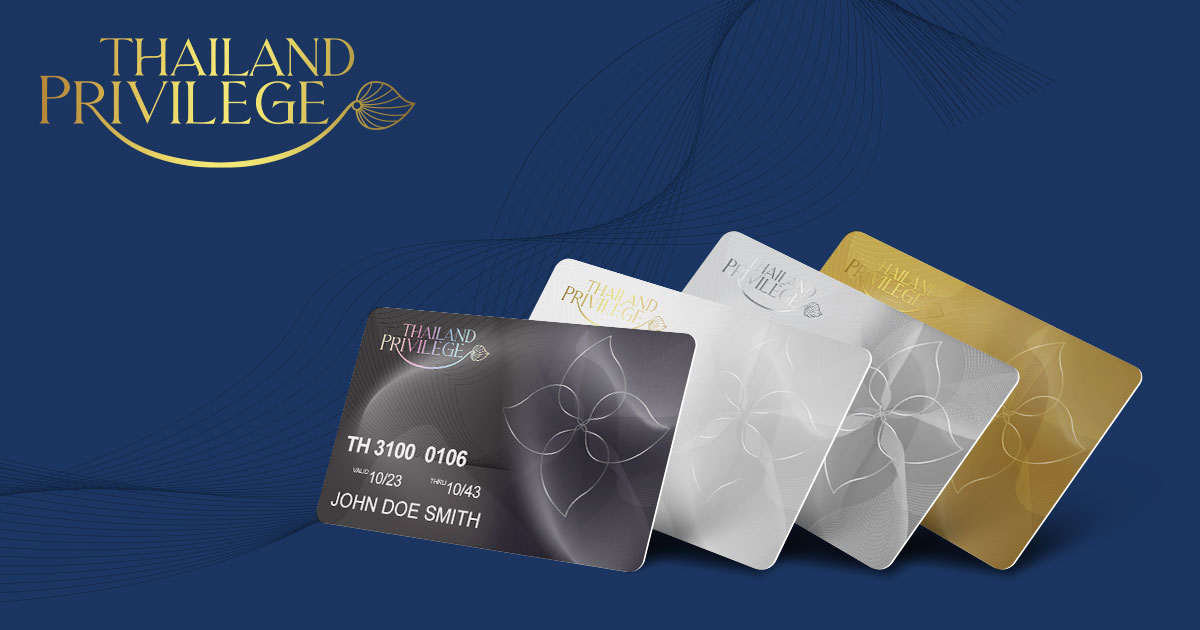
The Thailand Privilege Visa, formerly known as the Thailand Elite Visa, has undergone a significant revamp in 2024. This revamped program offers a more streamlined and potentially more affordable path to long-term residency in Thailand compared to previous iterations. Let’s delve into the details of the Thailand Privilege Visa 2024.

A Shift to Privilege Points

The key change is the introduction of a privilege point system. Instead of a fixed membership fee for varying visa lengths, applicants now choose a membership tier based on the number of privilege points they desire. These points translate to benefits like airport fast tracks, exclusive discounts, and wellness programs.

Membership Tiers and Benefits

The Thailand Privilege Visa offers three tiers:

  • Smart: This entry-level tier grants a 5-year multiple-entry visa with basic benefits like a dedicated arrival lane and discounts on government services.
  • Elite: This mid-tier option provides a 10-year multiple-entry visa and includes additional benefits like airport limousine service and exclusive member events.
  • Diamond: The top tier offers a 15-year multiple-entry visa with the most extensive privileges, including concierge services and annual health checkups.

Important Considerations

While the privilege point system offers flexibility, there are still factors to consider:

  • Membership Fee: The cost to acquire privilege points varies depending on the chosen tier and the number of applicants.
  • Annual Fees: Some tiers have annual fees that contribute to your point balance, allowing you to unlock additional benefits over time.
  • Minimum Investment: Unlike the previous Elite Visa, the Privilege Visa doesn’t require a minimum investment amount. However, some benefits, like property discounts, may be tied to specific investments.

Who Should Consider the Thailand Privilege Visa?

The Thailand Privilege Visa caters to a diverse range of individuals seeking long-term residency in Thailand:

  • Retirees: Enjoying an extended stay in Thailand with access to healthcare and wellness programs.
  • Remote Workers: Establishing a base in Thailand with visa security and airport fast tracks for frequent travel.
  • Business Travelers: Benefitting from hassle-free visa renewals and exclusive business networking opportunities.

How to Apply

The application process for the Thailand Privilege Visa is handled by the Thailand Privilege Card Co., Ltd. It involves submitting the required documents, paying the membership fee, and undergoing a background check.

A Streamlined Path to Paradise

The Thailand Privilege Visa 2024 presents a compelling option for those seeking a smoother and potentially more customizable path to long-term residency in Thailand. With its tiered structure and focus on privilege points, the program caters to a wider range of budgets and lifestyles. Whether you’re a retiree seeking a peaceful haven or a business traveler desiring a strategic base in Southeast Asia, the Thailand Privilege Visa offers a chance to make Thailand your home away from home.

Thailand Visa Exemptions

Thailand Visa Exemptions. Renowned for its captivating culture, breathtaking landscapes, and warm hospitality, has long been a favored destination for travelers worldwide. One of the reasons behind its popularity is the availability of visa exemptions for citizens of various countries. These visa exemptions grant visitors the freedom to explore Thailand for a limited period without the need for a visa. In this article, we delve into the visa exemptions in Thailand and highlight the benefits they offer to tourists.

  1. Visa Exemption Categories: Thailand offers visa exemptions to visitors falling under different categories. The most common ones include:

a. Tourist Visa Exemption: Under this category, citizens of many countries are allowed to enter Thailand for tourism purposes without obtaining a visa in advance. They are granted a 30-day stay, which can be extended by an additional 30 days at the discretion of the Thai immigration authorities.

b. Visa Exemption for ASEAN Countries: Citizens of fellow member states of the Association of Southeast Asian Nations (ASEAN) enjoy even more lenient visa regulations. They are granted a visa-free stay of up to 30 days for tourism or business purposes.

c. Bilateral Agreements: Thailand has signed bilateral agreements with certain countries, allowing their citizens to enter Thailand without a visa for varying durations. These agreements often extend beyond tourism and include purposes such as business, education, medical treatment, and more.

  1. The Convenience of Visa Exemptions: The visa exemptions in Thailand provide several advantages to tourists:

a. Easy Access: Travelers can explore the wonders of Thailand without undergoing the lengthy visa application process. This convenience saves time, effort, and additional expenses associated with visa procurement.

b. Flexibility: The visa exemptions allow visitors to plan their trip on shorter notice, as they can enter Thailand without prior visa approval. It offers greater flexibility for spontaneous travel arrangements and impromptu itineraries.

c. Cost Savings: Avoiding visa fees and related expenses can significantly reduce the overall cost of a trip. With visa exemptions, travelers can allocate their funds towards experiencing Thailand’s rich cultural heritage, indulging in local cuisine, or enjoying adventurous activities.

  1. Extending Your Stay: While the initial visa-free period is typically 30 days, visitors can extend their stay by an additional 30 days at the immigration office in Thailand. This flexibility enables travelers to immerse themselves in the country’s unique charm, delve deeper into its hidden gems, or even pursue volunteer opportunities.

It’s important to note that overstaying the visa exemption period is strictly prohibited. Violators may face fines, deportation, or other legal consequences. To avoid such issues, travelers must adhere to the stipulated duration and explore options for extensions if necessary.

  1. Upcoming Changes and Requirements: Thailand constantly reviews and updates its visa policies to ensure security and facilitate tourism. It’s advisable to stay updated with the latest regulations and requirements before planning a visit. Changes may include new agreements with countries, adjustments in visa-free periods, or the introduction of electronic travel authorization systems.

Conclusion: Thailand’s visa exemptions open the doors to an unforgettable experience in the Land of Smiles. The ease of access, flexibility, and cost savings make it an attractive destination for travelers from various corners of the globe. However, it is essential to stay informed about the latest updates and adhere to the rules and regulations set by the Thai authorities to ensure a hassle-free visit. So pack your bags, immerse yourself in Thailand’s vibrant culture, and embark on an incredible journey of discovery.